
UTM/Referrer attribution improvements for event completions
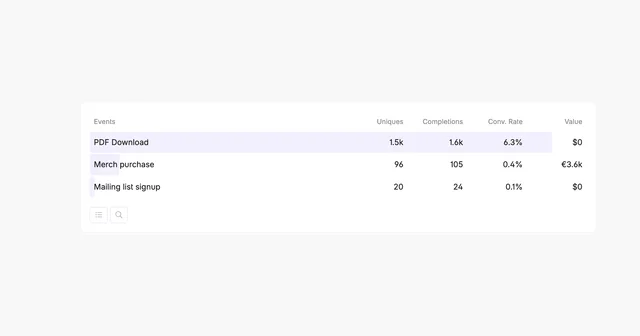
Previously, for event completions, Fathom would take the last known UTM/referrer attribution and associate that with the completed event. This posed issues for most customers, as it didn’t take into the account the initial UTM/referrer, which is typically the most important (especially for things like paid ad campaigns).
From Saturday (Aug 31, 2024) onwards, event completions now use the first referrer/UTM seen. This means things like Stripe’s ecommerce aren’t overwriting ad campaign data. So there’s now no way to change attribution for an event completion (which makes sense for almost all scenarios).
Here’s how it works:
- If an event doesn’t have a referrer or UTM on the initial pageview on your site, none will be tracked (since the initial pageview didn’t have referral data) for event completions.
- If an event has a referrer or UTM on the initial pageview, that referrer or UTM will be forever associated with any event completion that happen afterwards, even if new referrers or UTMs happen during that 24hour perior.
- For developers: If auto tracking is turned off for pageviews, the referrer or UTM on that submitted
trackEventwill be used. None will be used if none were present on the first submittedtrackEvent.
This means if you are testing your own site and visit it, then try to test a UTM or referrer for your paid campaigns, they aren’t on the initial pageview and therefore won’t be tracked. This isn’t a big deal as you can always test with different/fresh browser or an extension to randomize your User Agent.
Our customers have been asking for better attributions for event completions, so we’re pleased to be able to update how things worked to something that works better for our customers.
Sep 2, 2024